
Top 15 Portuguese Cuisine Delicacies: Every Food Lover Must Try

Portuguese cuisine is a rich blend of tradition, regional differences, and fresh local ingredients that showcase the country's deep cultural roots. Portuguese cuisine has something for everyone, from the seafood dishes of the Algarve to the hearty meat dishes of Porto and the sweet pastries of Lisbon. It features Atlantic fish, olive oil, spices, and rustic cooking methods, all shaped by centuries of exploration and maritime history. Portugal's cuisine is truly authentic and will leave a lasting impression. You can enjoy grilled sardines at a summer festival or a warm Pastel de Nata in Belém.
If you are planning a trip to Portugal or simply want to explore authentic European cuisine, here are the top 15 Portugal local food delicacies you must try at least once in your lifetime.

Top 15 Portuguese Cuisine Delicacies
Planning a trip to Portugal? Discover the top 15 Portuguese cuisine delicacies every food lover must try, featuring regional specialties from Lisbon, Porto, Algarve, and beyond.
1. Bacalhau à Brás (Lisbon)
Bacalhau, or salted codfish, is the most important food in Portugal. People say that Portugal has more than 365 cod recipes, one for each day of the year.
One of the most popular versions is Bacalhau à Brás, which comes from Lisbon. This comforting dish is made with shredded salted cod, thin fried potatoes, onions, and scrambled eggs. Black olives and fresh parsley are the last touches.
It tastes like home-cooked food from Lisbon: creamy, savory, and filling. You can find it in almost every "tasca," which is a traditional Portuguese restaurant.
2. Pastel de Nata (Belém, Lisbon)

A trip to Portugal isn't complete without trying the famous Pastel de Nata, a custard tart with a flaky crust and a caramelized top.
In the 19th century, this famous dessert came from the Belém district of Lisbon. The monks at Jerónimos Monastery developed the recipe, and the most famous bakery, Pastéis de Belém, still uses it. Served warm, sprinkled with cinnamon and powdered sugar, this sweet treat pairs perfectly with a strong espresso, known locally as a “bica.”
3. Francesinha (Porto)
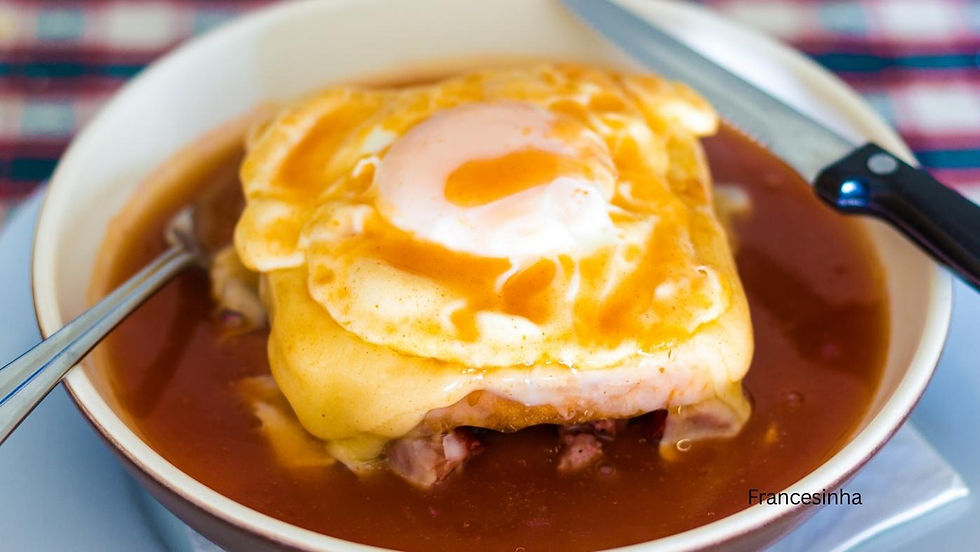
If Lisbon is known for elegance, Porto is known for bold flavors — and nothing is bolder than the Francesinha. This rich sandwich has layers of steak, cured ham, and Portuguese sausage, all covered with melted cheese and a thick, spicy tomato-and-beer sauce. It is common to put a fried egg on top and serve it with French fries.
The Francesinha is a must-try comfort food that came from Porto in the 1950s. You should try it after exploring the city's historic Ribeira district.
4. Caldo Verde (Minho Region)

Caldo Verde is one of Portugal's most popular soups. It comes from the northern Minho region.
Potatoes, onions, thinly sliced kale or collard greens, and slices of chouriço sausage make up this simple but tasty soup. People usually eat it at celebrations and festivals, especially during the Santos festivities in June.
Warm, rustic, and comforting, Caldo Verde reflects the agricultural roots of northern Portugal.
5. Arroz de Marisco (Coastal Portugal)
Portugal’s Atlantic coastline provides some of Europe’s freshest seafood, and Arroz de Marisco is a true celebration of it.
This seafood rice dish is rich and slightly soupy, filled with shrimp, mussels, clams, and sometimes crab or lobster. Unlike Spanish paella, Portuguese seafood rice is saucier and more intensely flavored.
Coastal towns such as Nazaré, Setúbal, and Peniche are famous for serving exceptional versions of this dish.
6. Cataplana de Marisco (Algarve)

The Algarve region in southern Portugal is known for its sun, beaches, and incredible seafood. One of its most traditional dishes is Cataplana de Marisco.
Named after the clam-shaped copper pan used to cook it, this seafood stew combines clams, prawns, white fish, tomatoes, garlic, onions, herbs, and white wine. The sealed-cooking method enhances flavors, creating a fragrant, delicious meal.
You’ll find authentic cataplana dishes in fishing towns like Lagos, Tavira, and Albufeira.
7. Cozido à Portuguesa (Nationwide)

Cozido à Portuguesa is Portugal’s ultimate traditional stew. It combines various meats — pork, beef, chicken, and sausages — with vegetables like cabbage, carrots, and potatoes.
Each region has its own variation. In the Azores, for example, it is cooked underground using volcanic steam, giving it a unique flavor.
This hearty dish represents family gatherings and Sunday lunches across Portugal.
8. Sardinhas Assadas (Lisbon & Coastal Cities)
Grilled sardines are one of Portugal’s most iconic foods. Known as Sardinhas Assadas, they are especially popular during Lisbon’s Santo António festival in June. Fresh sardines are grilled over charcoal and served simply with bread or boiled potatoes. Their smoky flavor and crispy skin capture the essence of Portuguese coastal cuisine. You can find them throughout Lisbon’s Alfama neighborhood during summer celebrations.
9. Polvo à Lagareiro (Northern Portugal)
Octopus is widely loved in Portugal, and Polvo à Lagareiro is one of the most traditional preparations.
The octopus is roasted until tender and drizzled generously with olive oil and garlic. It is typically served with smashed roasted potatoes. This dish highlights Portugal’s exceptional olive oil and seafood, particularly in the north.
10. Leitão da Bairrada (Bairrada Region)
The Bairrada region near Coimbra is famous for Leitão da Bairrada, or roasted suckling pig.
Slow-roasted in wood-fired ovens, the pig develops incredibly crispy skin while remaining juicy and tender inside. It is often served with orange slices and paired with local sparkling wine.
This dish is a highlight for meat lovers visiting central Portugal.
11. Alheira de Mirandela (Trás-os-Montes)
The Alheira sausage has a fascinating historical background. It was created during the Portuguese Inquisition by Jewish communities who disguised their food traditions to avoid persecution.
Unlike traditional pork sausages, alheira is made with bread, garlic, olive oil, and poultry or game meats. It is usually grilled and served with fried eggs and potatoes.
Mirandela, in the Trás-os-Montes region, is the best place to try authentic alheira.
12. Açorda Alentejana (Alentejo)
The Alentejo region is known for its rustic and simple cuisine. Açorda Alentejana is a traditional bread-based dish flavored with garlic, coriander, olive oil, and poached egg.
Some versions include shrimp or cod, but the classic recipe remains simple and comforting. It reflects the agricultural traditions of southern Portugal.
13. Piri-Piri Chicken (Algarve)

Portugal introduced chili peppers to Europe during the Age of Exploration, and Piri-Piri Chicken became one of its most popular spicy dishes. Marinated in a fiery chili sauce, the chicken is grilled over open flames until smoky and flavorful. The Algarve region is particularly famous for this dish.
Small local barbecue restaurants, known as “churrasqueiras,” serve some of the best versions.
14. Tripas à Moda do Porto (Porto)
This historic Porto dish, meaning “tripe in Porto style,” dates back to the 15th century.
According to legend, Porto residents gave their best cuts of meat to sailors and kept the tripe for themselves, creating this hearty stew made with white beans, sausage, and tripe.
It remains an important part of Porto’s culinary identity.
15. Queijo da Serra da Estrela (Serra da Estrela)
Portugal also produces exceptional cheeses. Queijo da Serra da Estrela is one of the country’s finest.
Made from sheep’s milk in the mountainous Serra da Estrela region, this creamy, soft cheese has a rich, buttery texture and strong flavor. It is traditionally served with rustic bread and regional wine.
Exploring Portugal Through Its Regions
Portugal’s food culture varies significantly from region to region:
Lisbon: Custard tarts, grilled sardines, and codfish dishes.
Porto: Hearty comfort food like Francesinha and Tripas.
Algarve: Fresh seafood and spicy grilled chicken.
Alentejo: Rustic bread-based dishes and olive oil flavors.
Azores & Madeira: Unique volcanic cooking and fresh Atlantic fish.
This diversity makes Portugal one of Europe’s most exciting culinary destinations.
Why Portuguese Cuisine Is Special
Portuguese food stands out for its simplicity and authenticity. Instead of complex sauces or heavy spices, it focuses on:
Fresh, high-quality ingredients
Atlantic seafood
Premium olive oil
Traditional cooking methods
Strong regional identity
Centuries of maritime exploration also introduced new spices and ingredients, enriching Portugal’s culinary landscape.
FAQ
1. What is Portuguese cuisine best known for?
The most famous dishes from Portugal are salted cod (bacalhau), fresh Atlantic seafood, grilled sardines, hearty stews, and the famous Pastel de Nata custard tart. It also has high-quality olive oil, rustic bread, and dishes from all over the country, from the north to the south.
2. What is the most traditional dish in Portuguese cuisine?
Bacalhau (salted cod) is one of the most traditional dishes in Portugal. It can be made in many different ways. Some other traditional dishes that people like are Caldo Verde soup, Cozido à Portuguesa stew, and Francesinha from Porto.
3. Is Portuguese cuisine mainly seafood-based?
Yes, seafood is a big part of Portuguese food because the country has a long coastline along the Atlantic Ocean. Some of the most popular seafood dishes are grilled sardines, octopus (Polvo à Lagareiro), and rice with seafood (Arroz de Marisco). People also really like meat dishes, though.
4. What desserts are popular in Portuguese cuisine?
The Pastel de Nata, a creamy custard tart, is the most famous dessert in Portuguese cuisine. Bolo de Bolacha (biscuit cake), Arroz Doce (sweet rice pudding), and desserts made with almonds from the area are also popular.
5. How does Portuguese cuisine vary by region?
There are big differences in Portuguese food depending on where you are. In the north, Porto is known for its hearty meat dishes; in the south, Lisbon is known for its pastries and sardines; in the Algarve, seafood is the main dish; and in Alentejo, rustic bread-based dishes and olive oil flavors are popular.