
Alentejo Travel Guide & Best Attractions Places in Portugal

If you are looking for a destination where golden landscapes, medieval villages, Atlantic beaches, vineyards and traditional Portuguese culture come together, Alentejo deserves a place on your Portugal itinerary.
Stretching across a large part of southern Portugal, this beautiful region is famous for its peaceful countryside, historic towns, cork oak forests, excellent food and some of the country's most spectacular coastline. Unlike Lisbon or the Algarve, the region often feels slower, quieter and wonderfully authentic.
From the UNESCO-listed historic centre of Évora to the dramatic Atlantic coastline around Vila Nova de Milfontes, there are countless experiences waiting to be discovered.
Whether you are planning a weekend escape, a road trip or a longer Portugal holiday, this Alentejo travel guide will help you discover the best attractions, towns, beaches, food and experiences.
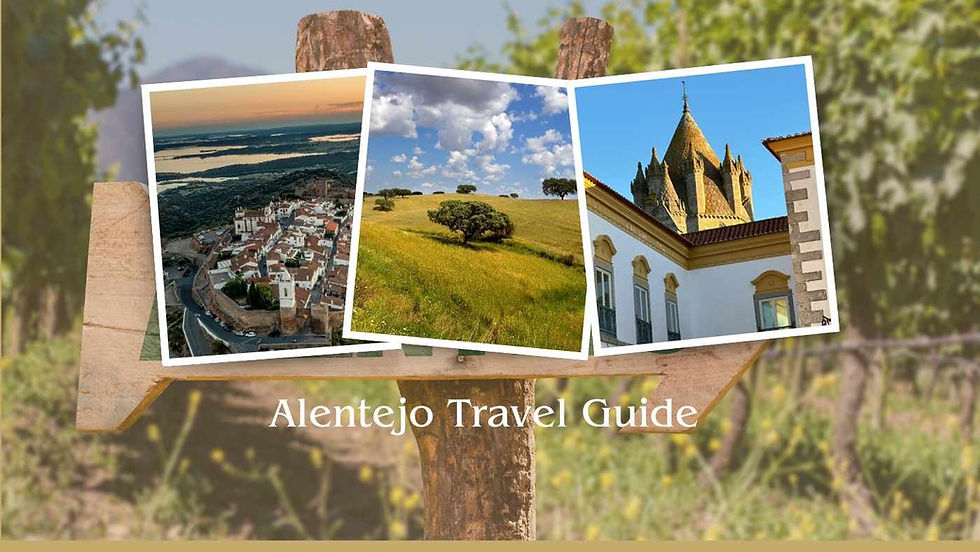
Where Is Alentejo?
Alentejo is located in south-central Portugal, between the Tagus River and the Algarve. It stretches from the Atlantic Ocean in the west to the Spanish border in the east.
The region is generally divided into several areas, including Alto Alentejo, Alentejo Central, Baixo Alentejo and the coastal area.
Its landscapes are remarkably diverse. You can explore rolling vineyards and wheat fields inland, medieval hilltop villages near the Spanish border and rugged cliffs and sandy beaches along the Atlantic coast. One of the biggest attractions is the sense of space. Roads wind through open countryside dotted with whitewashed villages, olive trees, cork oaks and traditional farmhouses.
Best Time to Visit Alentejo
The best time to visit depends on what you want to experience.
Spring, particularly April to June, is excellent for walking, sightseeing and exploring the countryside. Wildflowers can transform the landscape into colourful carpets, while temperatures are generally comfortable.
Summer is ideal for the Atlantic coast. Beaches such as Praia da Zambujeira do Mar, Praia de Odeceixe and Praia do Malhão are particularly attractive during the warmer months.
Autumn is a fantastic time for wine lovers because vineyards are surrounded by harvest activity. September and October also offer pleasant temperatures for exploring historic towns.
Winter is quieter and can be a rewarding choice for travellers who prefer fewer visitors, especially when exploring cultural attractions and traditional restaurants.
Best Places to Visit in Alentejo
1. Évora
No Alentejo travel guide would be complete without Évora.
This historic city is one of Portugal's most important cultural destinations and a UNESCO World Heritage Site. Its beautifully preserved old town contains Roman, medieval and Renaissance treasures.
One of the most famous landmarks is the Roman Temple of Évora, often called the Temple of Diana. Nearby, you can visit Évora Cathedral, one of Portugal's most impressive medieval buildings.
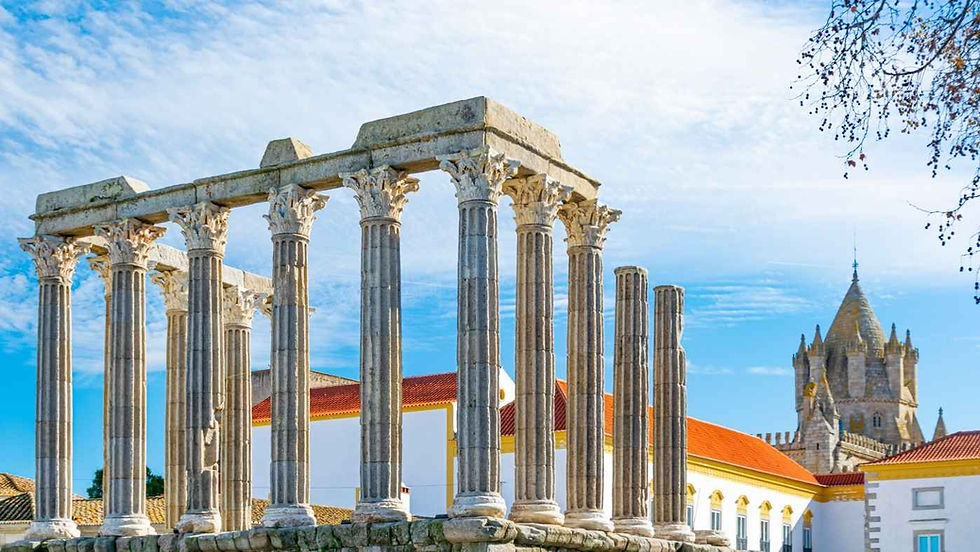
Another fascinating attraction is the Chapel of Bones, known for its unusual interior decorated with human bones and skulls.
Take time to wander through Évora's narrow streets, whitewashed buildings and traditional squares. The city is particularly enjoyable when explored on foot.
2. Monsaraz
Perched dramatically on a hill overlooking the Alqueva Lake, Monsaraz is one of the most beautiful medieval villages in Portugal.
The village is surrounded by ancient defensive walls and contains charming whitewashed houses, cobbled streets and historic churches.
The Monsaraz Castle provides spectacular views across the surrounding countryside and lake.
The area is also part of one of Europe's most impressive stargazing destinations. Thanks to relatively low light pollution, the region around Alqueva has become internationally recognised for astronomy and night-sky tourism.
For travellers interested in history, photography and peaceful landscapes, Monsaraz is an essential stop.
3. Comporta
For a completely different experience, head towards Comporta on the Atlantic coast.
Known for its relaxed atmosphere, sandy beaches, rice fields and stylish restaurants, Comporta has become one of Portugal's most sought-after coastal destinations.
Praia da Comporta is particularly popular for its long stretch of sand and beautiful dunes.
The surrounding area is perfect for travellers who want a combination of nature, beach time and sophisticated dining without the intensity of some larger resort destinations.
4. Vila Nova de Milfontes
Located along the Mira River, Vila Nova de Milfontes is an excellent base for discovering the southwest coast.
The town combines river scenery with access to spectacular Atlantic beaches. Visitors can enjoy kayaking, boat trips, coastal walks and swimming.
Nearby beaches include Praia da Franquia, Praia do Farol and Praia das Furnas.
Vila Nova de Milfontes is also connected to the Rota Vicentina, one of Portugal's best-known long-distance walking networks.
5. Zambujeira do Mar
If dramatic Atlantic scenery is what you are looking for, Zambujeira do Mar should be high on your list.
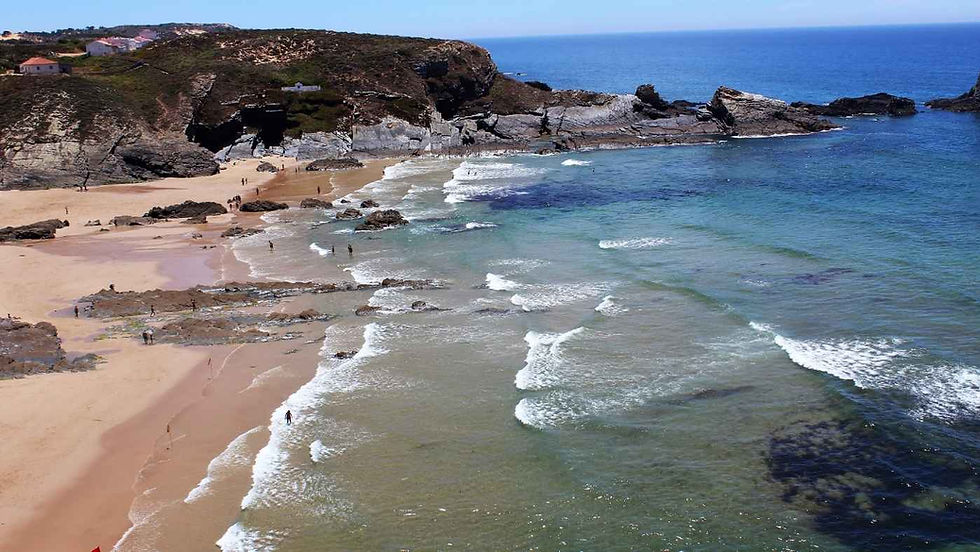
This small coastal village sits above impressive cliffs overlooking a beautiful sandy beach.
The surrounding coastline offers spectacular viewpoints, especially around sunset.
Zambujeira do Mar is part of the protected Southwest Alentejo and Vicentine Coast Natural Park, an area known for its rugged landscapes, wildlife and relatively untouched coastline.
It is a wonderful destination for travellers who enjoy hiking, photography and peaceful beach escapes.
6. Marvão
High in the São Mamede Mountains, Marvão is one of Portugal's most spectacular hilltop villages.
Its castle and fortified walls dominate the landscape, offering panoramic views across the surrounding countryside.
Walking through Marvão feels like stepping back in time. The narrow streets, traditional houses and stone architecture make it especially attractive for photographers and history lovers.
Nearby, you can also explore Castelo de Vide, another charming historic town known for its Jewish heritage and picturesque streets.
7. Estremoz
Wine lovers should include Estremoz in their itinerary.
The town is famous for marble, wine production and its historic centre. The enormous Estremoz Castle tower provides impressive views over the surrounding countryside.
The region around Estremoz is part of Portugal's important wine-producing area, making it a great place to visit vineyards and sample regional wines.
Local restaurants also provide opportunities to taste traditional dishes paired with wines from the area.
8. Alqueva Lake
The Alqueva Lake is one of the region's most impressive natural attractions.
Created by the Alqueva Dam, it is one of Europe's largest artificial lakes and has transformed the surrounding area into a destination for outdoor activities.
Visitors can enjoy boat trips, kayaking, fishing and scenic drives around the lake.
The villages of Monsaraz, Mourão and Amieira are particularly interesting bases for exploring the area.
At night, the lake region becomes even more special because of its exceptionally dark skies.
Best Beaches in Alentejo
Although many travellers associate Portugal's beaches with the Algarve, the Alentejo coast offers some spectacular alternatives.
Among the best beaches to explore are:
Praia de Odeceixe – famous for its dramatic setting where the river meets the Atlantic.
Praia da Zambujeira do Mar – a beautiful beach surrounded by cliffs.
Praia do Malhão – a wide, wild beach north of Vila Nova de Milfontes.
Praia de Almograve – known for dunes, cliffs and a peaceful atmosphere.
Praia do Carvalhal – a beautiful coastal escape near Comporta.
Praia da Comporta – a long sandy beach surrounded by dunes and pine forests.
The coastline is especially appealing because many beaches retain a natural, undeveloped character.
What Food Should You Try in Alentejo?
Food is one of the highlights of travelling through Alentejo.
Traditional cuisine is based on simple ingredients transformed into deeply flavoured dishes.
Try Açorda Alentejana, a traditional bread-based soup often flavoured with garlic, coriander and olive oil.
Another popular dish is Migas, made with bread and usually served with pork or other regional ingredients.
For meat lovers, Carne de Porco à Alentejana combines pork with clams and potatoes, creating one of Portugal's most recognisable dishes.
Cheese lovers should look for Queijo de Serpa, a famous regional cheese.
And, of course, leave room for regional desserts, local olive oil and Portuguese wine.
Best Things to Do in Alentejo
If you are wondering what to do in Alentejo, there is much more than sightseeing.
Explore Historic Villages
Walk through Monsaraz, Marvão, Castelo de Vide and other traditional villages to experience Portugal's architectural heritage.
Visit Vineyards
Wine tourism is an important part of the region. Visit wineries around Évora, Estremoz and Borba to learn about local wine production.
Walk the Rota Vicentina
Hiking enthusiasts can explore coastal trails with spectacular Atlantic views.
Enjoy an Alqueva Boat Trip
Take to the water for a relaxing perspective of the countryside around Europe's great artificial lake.
Go Stargazing
The Alqueva region is internationally recognised for its dark skies and excellent conditions for observing the stars.
Discover Local Markets
Traditional markets provide an opportunity to discover regional cheeses, cured meats, bread, olive oil and other local products.
How Many Days Do You Need in Alentejo?
For a first visit, 4 to 7 days is a good amount of time.
A 4-day itinerary could focus on Évora, Monsaraz, Estremoz and Alqueva.
With 5 to 7 days, you can combine historic towns with the Atlantic coast, including Comporta, Zambujeira do Mar and Vila Nova de Milfontes.
For a slower road trip, 7 to 10 days allows you to explore the region without rushing between destinations.
A rental car is particularly useful because many villages, vineyards, viewpoints and beaches are spread across large distances.
Is Alentejo Worth Visiting?
Absolutely. Alentejo is one of Portugal's best regions for travellers seeking authenticity, history, nature and exceptional food.
Its appeal comes from the variety of experiences. You can spend one morning exploring Roman ruins in Évora, enjoy lunch at a traditional restaurant, visit a vineyard in the afternoon and watch the sunset over the Atlantic coast the next day.
It is a destination where travelling slowly is part of the experience.
Whether you are interested in medieval villages, Portuguese cuisine, wine, hiking, beaches, photography or peaceful countryside, this region offers something memorable.