
Jerónimos Monastery Travel Guide: History, Tickets & Attractions

The Jerónimos Monastery is one of the most beautiful places in Lisbon and a great example of Portuguese architecture. This UNESCO World Heritage Site is in Belém's historic district. It is a powerful symbol of Portugal's Age of Discovery, maritime expansion, and architectural brilliance.
This complete travel guide to the Jerónimos Monastery has all the information you need to plan an unforgettable trip. It includes detailed historical information, architectural highlights, ticket information, nearby attractions, travel tips, and useful advice.

Why Visit Jerónimos Monastery?
The Jerónimos Monastery is more than just a place of worship; it is a huge monument to Portugal's power in the world in the 15th and 16th centuries. The monastery was built when Portuguese explorers were finding new sea routes. It shows how rich and ambitious the country was at the time.
It is renowned for:
Exceptional Manueline architecture
Historical connection to Portuguese explorers
UNESCO World Heritage recognition
Intricate stone carvings and cloisters
Cultural and national symbolism
For travelers interested in history, architecture, religion, or photography, Jerónimos Monastery is a must-see destination in Lisbon.
The Historical Background of Jerónimos Monastery
King Manuel I began construction of Jerónimos Monastery in 1501. It was built to honor Vasco da Gama's successful sea voyage to India in 1498, which made Portugal the most powerful maritime nation at the time.
The monastery was well situated near the Tagus River, which was the departure point for many Portuguese expeditions. It took the place of a small chapel dedicated to Santa Maria de Belém, where sailors would pray before they left.
Funding and Construction
A tax on spices, especially pepper and cinnamon, that were brought in from Asia paid for the project. The building took almost 100 years to build, which shows how big and artistic it was.
The Order of Saint Jerome (Hieronymites) moved into the monastery. They prayed for the king and gave spiritual support to sailors.
Architectural Style: The Beauty of Manueline Design
Jerónimos Monastery is considered the finest example of Manueline architecture — a uniquely Portuguese style that blends late Gothic elements with Renaissance influences and maritime symbolism.
Key Characteristics of Manueline Architecture
Maritime motifs (ropes, anchors, shells, sea monsters)
Botanical carvings inspired by overseas discoveries
Elaborate stone façades
Ornamental arches and ribbed vaults
Decorative columns with intricate detailing
The exterior façade stretches approximately 300 meters, making it one of the most visually impressive monuments in Lisbon.
What to See Inside Jerónimos Monastery
1. Church of Santa Maria de Belém
The church is one of the best parts of the monastery. The inside feels grand but also peaceful, and there is no cost to get in. The vaulted ceiling looks as if it weighs nothing, held up by thin columns covered in intricate maritime symbols.
The tomb of Vasco da Gama, whose voyage to India changed global trade, is inside the church. Also buried here is Luís de Camões, who wrote Os Lusíadas, an epic poem about Portugal's maritime exploration.
The mix of history, religion, and national pride makes this space very important.
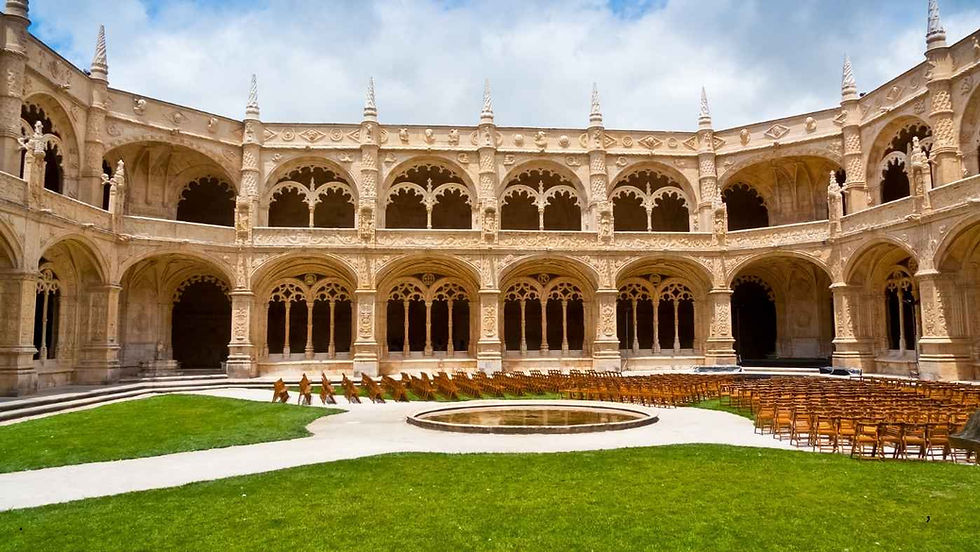
2. The Cloisters – The Highlight of Your Visit
The cloisters are widely regarded as the most beautiful section of Jerónimos Monastery. Spanning two levels, they showcase extraordinary stone craftsmanship.
Each arch and column tells a story through carvings representing:
Nautical ropes
Crosses of the Order of Christ
Coral and botanical forms
Royal emblems
The symmetrical courtyard creates a peaceful atmosphere, ideal for photography and reflection. Plan to spend at least one hour exploring this area.
3. Chapter House and Refectory
The Chapter House once served as a meeting place for monks. Today, it contains the tomb of historian Alexandre Herculano. The refectory (dining hall) features beautiful 18th-century azulejo tiles depicting biblical scenes. These blue-and-white ceramic tiles are a signature feature of Portuguese art.
Jerónimos Monastery Tickets & Practical Information
Opening Hours
October to April: 10:00 AM – 5:30 PM
May to September: 10:00 AM – 6:30 PM
Closed on Mondays and certain public holidays
Ticket Prices (Approximate)
Adults: €10
Seniors/Students: Discounted rate
Children under 12: Free
The church is free to enter, but tickets are required for the cloisters.
Pro Tip
Buy tickets online in advance to avoid long queues, especially during peak tourist season (June–August).
Best Time to Visit Jerónimos Monastery
The best seasons to visit Lisbon are spring (April–June) and early autumn (September–October). During these months:
The weather is mild and pleasant
Crowds are smaller
Lighting is ideal for photography
Early morning visits (right at opening time) offer a quieter experience and shorter wait times.
Top Attractions Near Jerónimos Monastery
Belém Tower is a UNESCO World Heritage Site and one of Lisbon's most famous buildings. It was built in the early 1500s and served as both a ceremonial entrance to the city and a defensive fortress. The tower stood along the Tagus River and protected Lisbon's harbor during the Age of Discoveries. The Manueline-style architecture features detailed maritime carvings and decorative stonework that showcase Portugal's naval strength and history of exploration.
The Monument to the Discoveries honors Prince Henry the Navigator and other explorers who shaped the history of global navigation. The monument’s dramatic design resembles a ship setting sail. Visitors can ascend to the top for panoramic views of the Tagus River and the Belém district.
MAAT—Museum of Art, Architecture and Technology
MAAT—Museum of Art, Architecture and Technology offers contemporary exhibitions and an impressive riverside design, creating an interesting contrast with the historic monastery.
Pastéis de Belém
Pastéis de Belém is famous for the original Portuguese custard tart (Pastel de Nata). Established in 1837, it uses a secret recipe passed down through generations.
Pair your monastery visit with this sweet treat.
How to Get to Jerónimos Monastery
From central Lisbon:
Tram 15E from Cais do Sodré
Train from Cais do Sodré to Belém
Bus routes 727, 728, and 729
Travel time: Approximately 20–30 minutes.
Walking along the waterfront from central Lisbon is also scenic and enjoyable if weather permits.
Cultural and UNESCO Significance
It was designated a UNESCO World Heritage Site in 1983 due to its exceptional architectural value and cultural importance.
It symbolizes:
Portugal’s Age of Discoveries
Catholic heritage
Renaissance artistic achievement
Maritime exploration history
It is considered one of the most important monuments in Portugal.
Travel Tips for an Unforgettable Visit
Arrive early to avoid queues.
Wear comfortable shoes; stone flooring can be uneven.
Bring water during the summer months.
Combine Belém attractions into one full-day itinerary.
Allocate 2–3 hours for a complete visit.
Respect quiet areas inside the church.
Frequently Asked Questions
1. Why is Jerónimos Monastery famous?
It is famous for its Manueline architecture and connection to Portugal’s Age of Discovery. It houses the tomb of Vasco da Gama and is a UNESCO World Heritage Site symbolizing Portugal’s maritime exploration legacy.
2. How much is the ticket for Jerónimos Monastery?
Here tickets typically cost around €10 for adults, with discounts for students and seniors. Entry to the church is free, but access to the cloisters requires a paid ticket.
3. How long should I spend at Jerónimos Monastery?
Visitors should plan to spend approximately two to three hours exploring Jerónimos , including the church, cloisters, and exhibitions. Arriving early helps avoid long queues and ensures a more relaxed experience.
4. What attractions are near Jerónimos Monastery?
Top attractions near Jerónimos Monastery include Belém Tower, the Monument to the Discoveries, MAAT Museum, and Pastéis de Belém. All are within walking distance in the historic Belém district of Lisbon.
5. What is the best time to visit Jerónimos Monastery?
The best time to visit Jerónimos Monastery is during spring or early autumn when crowds are smaller, and the weather is pleasant. Early morning visits are recommended to avoid peak tourist hours.