
Top 13 Must-Visit Monuments in Algarve: A Journey Through History

Updated: Dec 20, 2025
The Algarve is the southernmost part of Portugal. It boasts warm Mediterranean weather, charming towns, and stunning beaches. The Algarve boasts a picturesque natural landscape and a rich history and culture. The region features monuments spanning from Roman times to the Moorish era and beyond, including those of Christian influence.
Fortresses, castles, churches, and ruins in the Algarve have amazing architecture that shows off its history. Each one tells a different and often interesting story about the area's past.
Whether you are an aficionado of history, someone who finds pleasure in architecture, or perhaps just someone wanting to explore the more profound cultural heritage of these 13 monuments of the Algarve that must be visited, this offers a fascinating insight into how variegated and rich the past lived.
Top 13 Must-Visit Monuments in Algarve
1. Fortaleza de Sagres
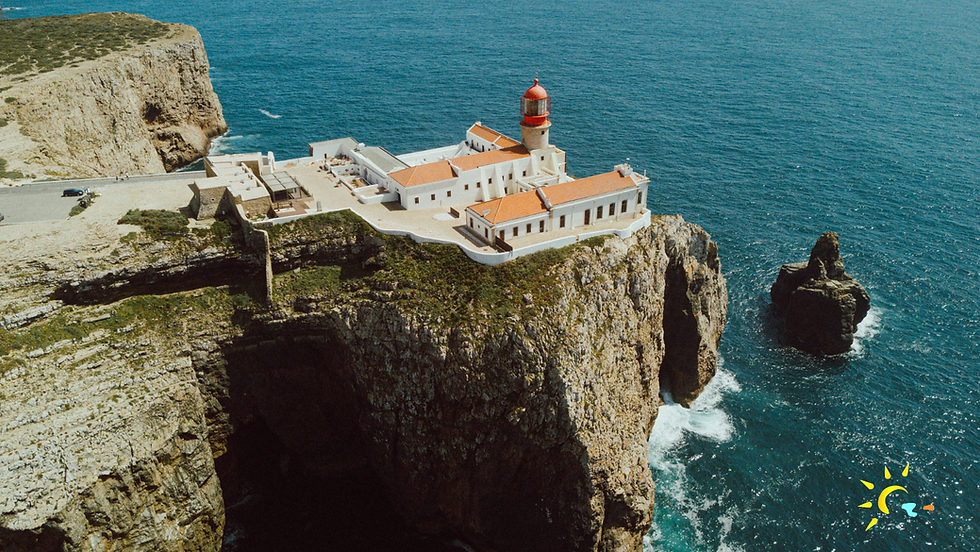
The Fortaleza de Sagres acts as an excavation site marking Portugal's southwestern limit, thus emerging as a fortress critical to the Age of Discoveries in Portugal. Commissioned in the 15th century by Prince Henry the Navigator, the fortress is indissolubly tied with the beginnings of Portugal's introduction to maritime exploration. It is said that at this very place, Prince Henry set up a navigation school, which served as a funding institution for training sailors bound to create fame by sailing beyond the boundaries of known seas. One can now explore the massive walls and grounds of Fortaleza de Sagres.
It has to be one of the most spectacular views of the Atlantic Ocean: rugged cliffs outline the fortress, making it a highly popularized site, one of the most famous among photographers and history buffs. Walking within this fortress is walking through Portugal's maritime past, and a visit is obligatory for any person keenly interested in exploring his country's world's significant role.
2. Castelo de Silves
Castelo de Silves is situated in the town of Silves and is one of the best-preserved castles in the whole Algarve. Fortress castle- an Islamic architecture wonder, built in Portugal in the 11th century when the Moors still ruled the land. Perched on a hill, the castle offers beautiful sightlines over the area below, featuring an impressive red sandstone fortification. This castle has immense wall-walks, towers, and ramparts.
Come here to relive the violent past of a military fortress during the Moorish and the Christian era. The superb preservation and the entire story of this castle have helped sustain it as one of the paramount monuments for the entire region of Algarve.
3. Arco da Vila-Faro Faro, capital of Algarve,
The house has one of the most imposing Neoclassical arches. The arch was constructed where a Moorish gate once stood, giving it now the function of the official entrance gate into the old town. Arco da Vila is a fine example of the integration of construction styles characteristic of the Algarve, showcasing influences from both Portuguese and Moorish traditions.
This takes you into the historic center of Faro, featuring cobbled streets, charming squares, and a handful of other notable monuments, including the Igreja do Carmo and the Faro Museum. The Arco da Vila significantly contributes to the coastal heritage of Faro, embodying cultural and architectural significance.
4. Igreja de São Lourenço (Church of St. Lawrence)-Almancil
Igreja de São Lourenço is one of Algarve's few well-kept secrets. It is located within Almancil. The tiny yet stunning Baroque church is most famous for its interior, which overwhelms one with its completely blue-and-white azulejos (conventional Portuguese tiles) that depict events in life- a martyrdom scene of St. Lawrence. And this is an impressive artistry.
The church's interior forms part of an extensive beautiful work that the tilework testifies to the artistry of Portugal. With this peacefulness, that detailed work makes this church one of the most view-worthy places on the Algarve and a must-see for all enthusiasts of Baroque architecture and Portuguese art.
5. Fortaleza de Santa Catarina – Portimão
The high and picturesque Praia da Rocha beach was where the Fortaleza de Santa Catarina was built in the 17th century to praise the Algarve from attacks by pirates. The fort itself overlooks views of the coastline and ocean. The strategically placed fort also oversees views of the coastline and ocean. Although it is smaller than some other castles, the Fort of Santa Catherine presents visitors with an exciting display of Portugal's military history, while also offering a great place to enjoy the far-reaching views.
Along with some beautiful beaches in the surrounding area, the Fortaleza de Santa Catarina is a great spot for combining history with beach time.
6. Castelo de Paderne (Paderne Castle)
Paderne Castle is a 12th-century Moorish fort situated farther inland in the Algarve, now in ruins but retaining some archaeological importance for medieval centuries. Nonetheless, the traces of castle constructions remind one of events from the Moorish times that allow a person to penetrate some of the mediaeval defences and architecture surrounding the region.
As it appears on the coat of arms of Portugal, Paderne Castle is among the select few castles of great historical significance. The walks provide yet another opportunity for someone to interact with the ruins and strategically assess the fort's importance in the midst of wars between the Moors and the Christians.
7. Estoi Palace (Palácio de Estoi)
The latest place is Estonia Palace in the Rococo style. Este palacio is erected near an outsized Faro, and the palace dates back to the 19th century, famous for its graceful style and gorgeous gardens. In a public sense, intricate tileworks, fountains, and manicured gardens stand as glorious manifestations of the architecture of Portuguese nobles.
Visitors can wander around the grounds of the Palace, which create a peaceful environment with ample space for a good walk. Whether landscape architecture is compelling or simply to get away from the humdrum, Estoi Palace offers a great place to unwind and enjoy the atmosphere of Algarve.
8. Roman Ruins of Milreu – Estoi
The Roman Ruins of Milreu stands among the most important archaeological sites in the Algarve. A few miles from Estoi, the ruins are dated back to the first century of our Common Era, contributing much to the Roman history of the region. It's believed to be the site of a preserved Roman villa, whose floor paintings, baths, and other Roman constructions are still in existence.
One such highlight is the exquisitely laid-out mosaic floors, which feature delicately designed patterns that narrate Roman art and craftsmanship. It thus follows that, if Roman history and archaeology are in one's line of thought, the Roman Ruins of Milreu are a must-see.
9. Chapel of Bones (Capela dos Ossos) – Faro
The Chapel of Bones is one of the most macabre and mysterious sights in the Algarve, located within the Igreja do Carmo in Faro. It contains a pretty massive assemblage of skulls and bones of priests put-up into intricate patterns arranged on the walls and ceiling. The chapel serves as a reminder for the transitory nature of life and gives its visitors a rather unusual yet stimulating experience. For all those interested in that dark, devious aspect of history, fans of Portuguese religious traditions can plan a trip to the Chapel of Bones, but it is definitely not meant for the faint-hearted.
10. Castelo de Loulé (Loulé Castle)
This place is what the medieval fortress looked like at Loulé because it still has the structures and three towers, the remainder of the original walls. From records, the castle was built in the 12th century. Minor museum artifacts from the Roman, Moorish, and Christian periods will be provided in an organized setup.
It is, therefore, easy to visit while strolling in Loulé town; the castle is the ideal location for historical information, and the beautiful surrounding area is perfect for city sightseeing.
11. Alcáçova de Tavira (Tavira Castle)
Alcáçova de Tavira (Tavira Castle) History remains; this is an experience of a medieval castle, Alcáçova de Tavira during its Moorish period. The remnants remain of historical importance due to the castle's total ruination in years past.
The Alcáçova de Tavira provided an excellent bird's-eye view of the town and the surrounding landscape, offering a beautiful window into the past Moorish splendor and the early history of Tavira.
12. Igreja do Carmo (Carmo Church) - Faro
Igreja do Carmo was an excellent example of Baroque architecture in Faro and famed for its Chapel of Bones, a contrast at once beautiful and sinister. But there is more to the church than the chapel, with worthy parts of its story to be discovered as the visitor takes in the morbid yet fascinating sights of the Chapel of Bones.
13. City of the Discoveries, Lagos
In Lagos, it takes the form of the City of the Discoveries. This Monument, dedicated to those famous names in history, would also honor others, including the great Prince Henry the Navigator, who will always be remembered as the man who achieved greatness through his outstanding work in the service of establishing Portugal on the world map.
For all those interested in this unique phase of world exploration, this is a must-see as it reminds the importance of the Algarve in this scheme of things.